Getting Started in Rise of Nations
First-year fundamentals: nation pick, factories, justification, and early goals.
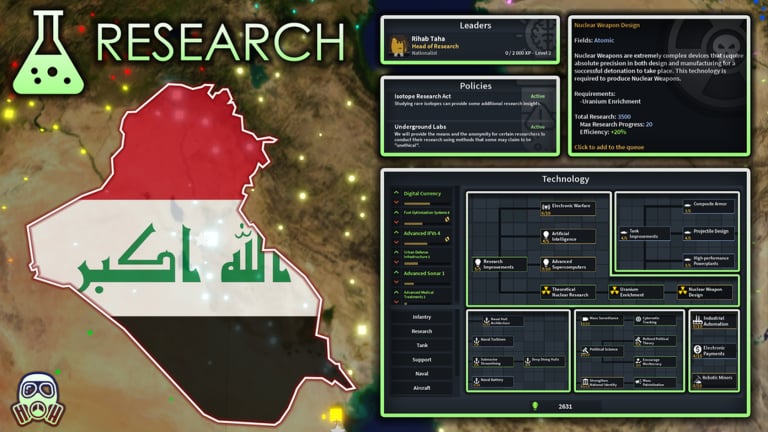
Rise of Nations by Hyperant is a Roblox grand strategy game about turning one of roughly 240 nations into a world power. Matches open in a lobby, you claim a free nation (or an XP-locked superpower if unlocked), then the clock starts on factories, research, diplomacy, and war. This beginner guide focuses on the first in-game year: what to buy, who to fight, and which habits separate surviving players from bankrupt stacks. For the full tutorial index, return to the Guides Hub. For keyboard speed, keep Controls open in another tab.
Pick a nation that teaches systems
Your first country should have room to expand into AI neighbors, a workable resource mix, and low player density. Crowded Europe looks exciting and then becomes a meat grinder of justifications, coalitions, and nuke politics before you understand consumer goods. Strong teaching grounds include southern Africa, parts of South America, and quieter Asian or Middle Eastern starts. South Africa is a classic beginner tip: solid resources (chromium, copper, gold, diamonds, tungsten), enough manpower to field an early army, and a path toward the South African Union formable while nearby AI states are often free. Watch for later pressure from Nigeria, Egypt, or superpowers hunting resources, but the opening window is forgiving.
Avoid starting as India, the United States, or China until you unlock them and understand eco — those Tier VII starts also give only 0.11x player XP, so they are poor accounts for farming. See How to Get XP and Beginner Nations for unlock thresholds and starter rankings.
First factories beat vanity development
Every nation begins with a large cash buffer (commonly cited as around 100 million). Spend it on factories immediately when the intermission ends, not on decorating cities. Factories produce tradeable manufactured goods; early city development is a weaker return until income is online. Common early setups include:
- One steel, one motor, two electronics (tank-oriented)
- Four electronics (maximum early trade greed)
- One steel, one motor, one electronics, one fertilizer, one civilian/consumer when policies cut build cost
Electronics and consumer goods print money when sold to AI. Steel and motors support tanks and later industry. Fertilizer supports broader eco. Aircraft parts come later for most beginners. Full factory math lives in the Economy Guide.
Before you queue five plants, enact Ignore Safety Regulations and Improve Infrastructure. Together they provide about -30% building cost (roughly -20% and -10%), dropping factory prices enough to squeeze an extra plant out of the starting treasury. That fifth factory is often the difference between a balanced mix and a brittle all-electronics line.
Consumer goods and unrest
Consumer goods (civilian factories) are not optional fluff. They help satisfy population demand, support stability, and keep unrest from eating your tax base while you justify and fight. Trade surplus consumer goods to AI when the market allows, but keep enough for your own cities. Pair consumer production with sensible tax settings: smaller populations often sit better on lower tax; large cores can push higher tax if unrest is controlled. Democracy-leaning paths favor tax income; Communism-leaning paths favor factory output — details in the Economy Guide.
Justify war the smart way
Do not declare randomly on day one against a player Germany. Justify on small AI neighbors while your factories finish. Justification takes time and can stress stability and relations; queue targets you can finish quickly so you return to peace for formables. Keep an eye on manpower before you click declare: a shiny army with zero reinforcements collapses the moment battles burn divisions. Entrench on favorable terrain when defending; use tanks and artillery to crack AI lines when attacking. Doctrine choices and unit roles are covered in the Military Guide.
A useful AI habit: lure enemy stacks onto bad ground or away from cities, then collapse them with concentrated fire and auto-capture follow-ups. Beginners who only right-click the capital often bleed manpower into pointless frontal assaults.
Do not start Europe (yet)
Europe concentrates skilled players, overlapping formable claims, and early tank metas. You will learn more about trade, policies, and justification by snowballing AI in Africa or South America than by dying to a veteran Italy in month two. Once you can fund a full factory line, manage consumer goods, and win two or three AI wars without debt spiral, Europe becomes a fair challenge instead of a tutorial wall.
First-year goals checklist
- Enact Ignore Safety Regulations and Improve Infrastructure.
- Build a balanced factory set including electronics and consumer goods.
- Set tax and spending so you are not bleeding money into debt.
- Justify and annex nearby AI; integrate cities and rebuild factories on new cores.
- Aim for an early formable that needs few contested tiles — see Formables and the Formables Tier List.
- Research tank or infantry tech appropriate to your neighbors; keep military spending high enough to fight, not so high that eco dies.
- Learn hotkeys from Controls so you train, split, and halt units without hunting UI buttons.
Ideology sketch for beginners
You do not need a perfect ideology on day one, but know the trade: Democracy / Liberalism paths boost tax income and help unrest control at the cost of slower justifications and weaker factory multipliers. Socialism / Communism paths smash factory and resource output while cutting tax — excellent for resource-rich starts like South Africa once you can feed plants. Fascist or nationalist paths speed expansion and cut some military costs but demand careful stability management. Change ideology when political power and unrest allow; forced flips mid-war can shatter a run.
After the first year
If income is rising and you hold a regional formable, push into the Military Guide for doctrines (Static Lines remains a strong all-rounder for many players; Manoeuvre suits early tank aggression). Track account XP between matches so India, the United States, and China unlock when you are ready. Read Updates after patches — river bonuses, project systems, and doctrine tweaks change optimal openings. Community help is on Discord at discord.gg/riseofnations. There are still no promo codes; ignore any site claiming free Robux or nation unlocks through codes — see Codes.
Master the first year and every later system gets easier: debt is optional, wars are funded, and formables become planned campaigns instead of lucky clicks.
Frequently Asked Questions
Quick answers players search for every session.
What should I buy first in Rise of Nations?
Factories. Enact Ignore Safety Regulations and Improve Infrastructure for cheaper builds, then prioritize electronics and consumer goods while adding steel and motors if you plan early tanks. Details are in the Economy Guide.
Why is South Africa recommended for beginners?
South Africa offers strong resources, usable manpower, quieter early neighbors than Europe, and a reachable regional formable. It teaches trade and expansion without constant player wars.
Why avoid starting in Europe?
Europe is dense with experienced players and contested formables. Beginners learn more by beating AI and stabilizing eco elsewhere before entering that arena.
How do consumer goods help new players?
Civilian factories produce consumer goods that support population needs and stability. Without them, unrest and weak trade income make early wars much harder.
When should I justify my first war?
After factories are building and you can afford upkeep. Target small AI neighbors you can finish quickly so you return to peace for formables. See the Military Guide for unit tips.
Are there codes to unlock nations faster?
No. Rise of Nations has no promo codes. Unlock India, the United States, and China with player XP as explained in How to Get XP.